

To fulfill its mission of treating the whole person, not just the disease, SOS developed a paper questionnaire for patients to complete prior to being examined. However, the difficulty of integrating that information for accurate analysis led them to develop a software product that would collect and provide more comprehensive information at the point of care for both patients and doctors. SOS and ATS spent three years designing, testing and refining the product with a pilot program at The West Clinic, which receives 10,000 patients annually. While pleased with the development of the product’s software applications, SOS and ATS struggled to find an appropriate, patient-friendly computer to effectively gather and deliver the information needed.
“We wanted the technology to look and feel like the paper and pen they {the patients} had always used to complete the forms,” said Ted Okon, SOS’ president. (As quoted in “A Tablet a Day…”, Health Data Management, March 2004).
The two companies tried several pen-based devices but found that small screens, slow processors and the difficulty of operating and maintaining the applications on earlier versions of Windows inhibited the software’s effectiveness.
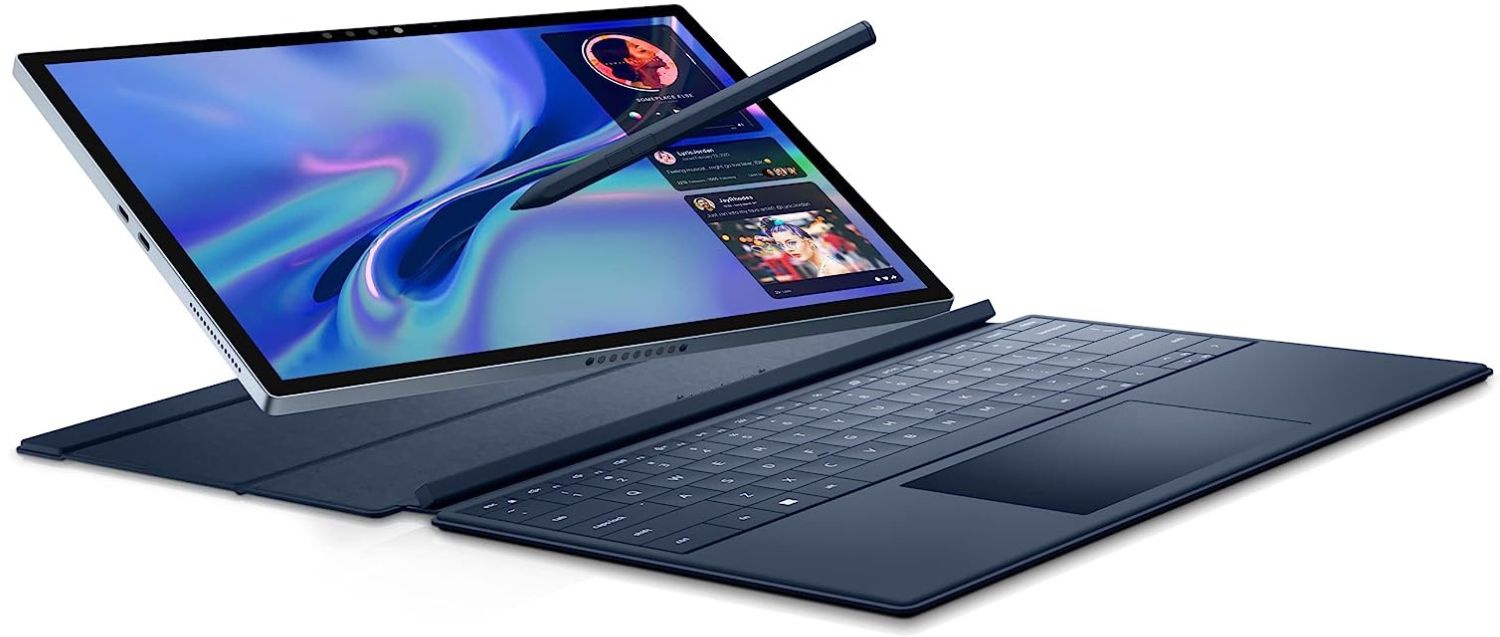
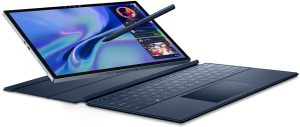
Doctors benefit because all patient information is sent to the clinic’s backend servers via the Motion tablet’s built-in wireless capabilities, providing an overview of each patient’s symptoms and concerns before the exam. Also, equipped with Intel’s ultra-low voltage processor and Microsoft’s Windows XP Tablet PC operating system, the Motion tablet makes it much easier for ATS and SOS to run the product’s software applications. As David Engelhardt, president of ATS, stated, “The job Microsoft has done on Windows’ handwriting-recognition capabilities alone allows us to create more sophisticated questionnaires and forms.”
As the Motion tablet PC was deployed in The West Clinic, SOS finally could see its product – the SOS e/InfoCare System – working as originally intended by collecting and delivering important patient information at the point of care.
The Motion tablet PC enabled the full use of the SOS e/InfoCare System’s three components, which include:
“Now that physicians can review a patient’s symptoms before they see the patient, time is saved by alleviating the need to determine face to face with a patient what to discuss during an exam,” said Kelly Moore, R.N., head of all nursing champions at the SOS sites. “However, the intention of this initiative has never been to make the time physicians spend with patients shorter. Instead, the goal has been to make that time more valuable and meaningful. And it really has helped the physician-patient relationship.” (As quoted in “A Tablet a Day…”, Health Data Management, March 2004).
Doctors are now able to ask specific questions about each patient’s physical and psychological condition and pinpoint unusual symptoms that may not have been detected without the e/InfoCare System’s database. Being able to discuss every issue and concurrently fine-tune the treatment during the exam not only increases the quality of care and provides an extra level of comfort for doctors and patients, but also saves money by taking much of the guesswork out of the process. In addition, as patients receive a more customized education about their condition via the Motion tablet PC, they are better able to collaborate with the doctor on their treatment.
“We are fundamentally changing the way cancer patients are treated at the point of care, made possible by new technologies like broadband wireless and the tablet PC,” said Dr. Barry Fortner, chief operating officer of SOS and director of psychology and cancer symptom research at The West Clinic. “By collecting more complete information from cancer patients at the point of care, we are literally improving people’s lives. Motion Computing’s commitment to this endeavor has been invaluable to us.”
The e/InfoCare System has been so successful that SOS and ATS are taking it nationwide. To date, ATS has deployed more than 539 Motion Computing tablet PCs in 16 oncology clinics. SOS’ plan is to aggregate the results of all practices into a database and look for patterns, with the goal of determining the best way to care for patients. In addition to The West Clinic in Memphis, the e/InfoCare System has been deployed at oncology clinics in the following cities, helping patients enjoy a better quality of care leading to an overall better quality of life: